Exclusive

Little Rawr Silicone Stacking Teether Beads
$12.74
$14.99
SAVE $2.25
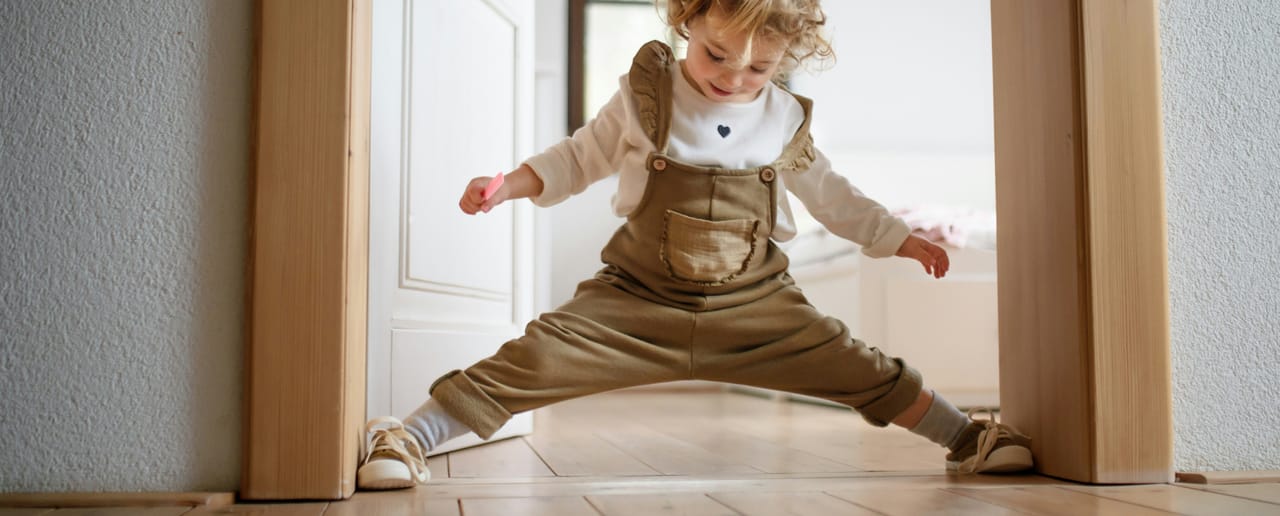
“Play is the work of the child”, as the Montessori saying goes. As well as helping children explore the world around them, playing is a valuable way of helping your toddler develop a wide range of skills.
“Learning through play is a critical part of childhood development,” says paediatrician Dr Victoria McKay. “It’s how toddlers – and older children too – learn.”
“Playing helps with key developmental milestones, for example, building blocks can help with fine motor skills while role playing can help with emotional and social development.”
Of course, play can be simply for fun and relaxation too.
Playing is proven to enhance brain structure and function, as well as boosting memory, creative thinking and self control. Studies show that engaging in play also helps children with social and emotional skills, language skills, sensory processing and fine and gross motor skills.
Playing alone, with other children, and with parents all have their merits. “Sometimes playing alone is a way of self-regulating for children,” says Dr McKay. “It’s a good way to recharge.”
At other times, it’s important to get involved with your toddler’s play. “Sometimes our toddlers are looking for us and want us to be involved,” she says. “Time spent interacting and playing with a toddler shows we’re connecting with them on something that’s important to them.”
Playing with others, whether it’s an adult or another child, also encourages important negotiating skills. “A child might want to play in a certain way, while a play partner might want to do things differently. This can help children to accept things from a different angle,” she says.
You don’t need to spend lots of money on the latest trending toys for your child. “Simplest toys are often the best,” says Dr McKay. “This is because it allows children to really use their imagination. When toys are too intricate, it can actually prevent creativity.”
“Building blocks, magnetic tiles, Lego, or anything children have to manipulate is great for fine motor skills,” says Dr McKay. These are the small, precise movements we make with our hands, fingers, feet and toes.
“These types of toys also help develop strength and grip in hands, which are precursors to holding a pencil at school.”
Dolls, animals, cars and dress ups are all excellent for developing social and emotional skills. “These toys are often used for copycatting what’s happening in the real world, and helping children understand how things work,” says Dr McKay.
“Imaginative play also helps children understand relationships, as well as recreating experiences they may have had previously. This can help their brains process emotions and experiences,” she says.
“Water, sand, playdough and foam are a great way of helping children with sensory processing,” says Dr McKay. “Eating foods of different flavours and textures can also be a great sensory experience!”
Books are wonderful for almost everything. “Reading is critical to children’s development,” says Dr McKay. “Books help with language development and allow children to understand the world around them. They can also help children settle themselves and understand that stories and words can make them feel good.”
“Simply being in nature, such as the park or the beach, is great for development,” says Dr McKay. “Being in a natural environment encourages exploration and imagination.”
“Pencils and paper, chalk, and cooking are all brilliant for fine motor skills and hand-eye coordination,” says Dr McKay. “Drawing and painting allow children to spot a connection between what they see and what they do.”
“Playing with a ball is great for hand-eye coordination, spatial awareness, balance and coordination.” Kicking a ball to someone else also helps with social skills and understanding to take turns. Bikes and trikes can also help with balance, coordination, and large motor skills.
Pretty much all toys will give your child an education of some kind, whether it’s about texture, counting, role play or learning different colours. Here are some ideas for the little people in your life.
The best toys spark imagination, encourage exploration, and grow with your child's development. Simple, open-ended toys often provide the most learning opportunities and longest-lasting engagement.